
Specify the Lighting Experience Before the Driver
A dimmable custom LED chandelier should do more than become less bright. It should start reliably, hold the atmosphere selected by the designer and respond predictably when staff recall a lighting scene. Those requirements need to be agreed before the chandelier’s electrical design is finalized.
For a hotel lounge, the critical moment may be the transition from afternoon service to a quieter evening setting. In a villa, it may be switching on at the lowest saved level without a bright flash. For a commercial reception area, it may be matching several decorative fixtures on the same control system.
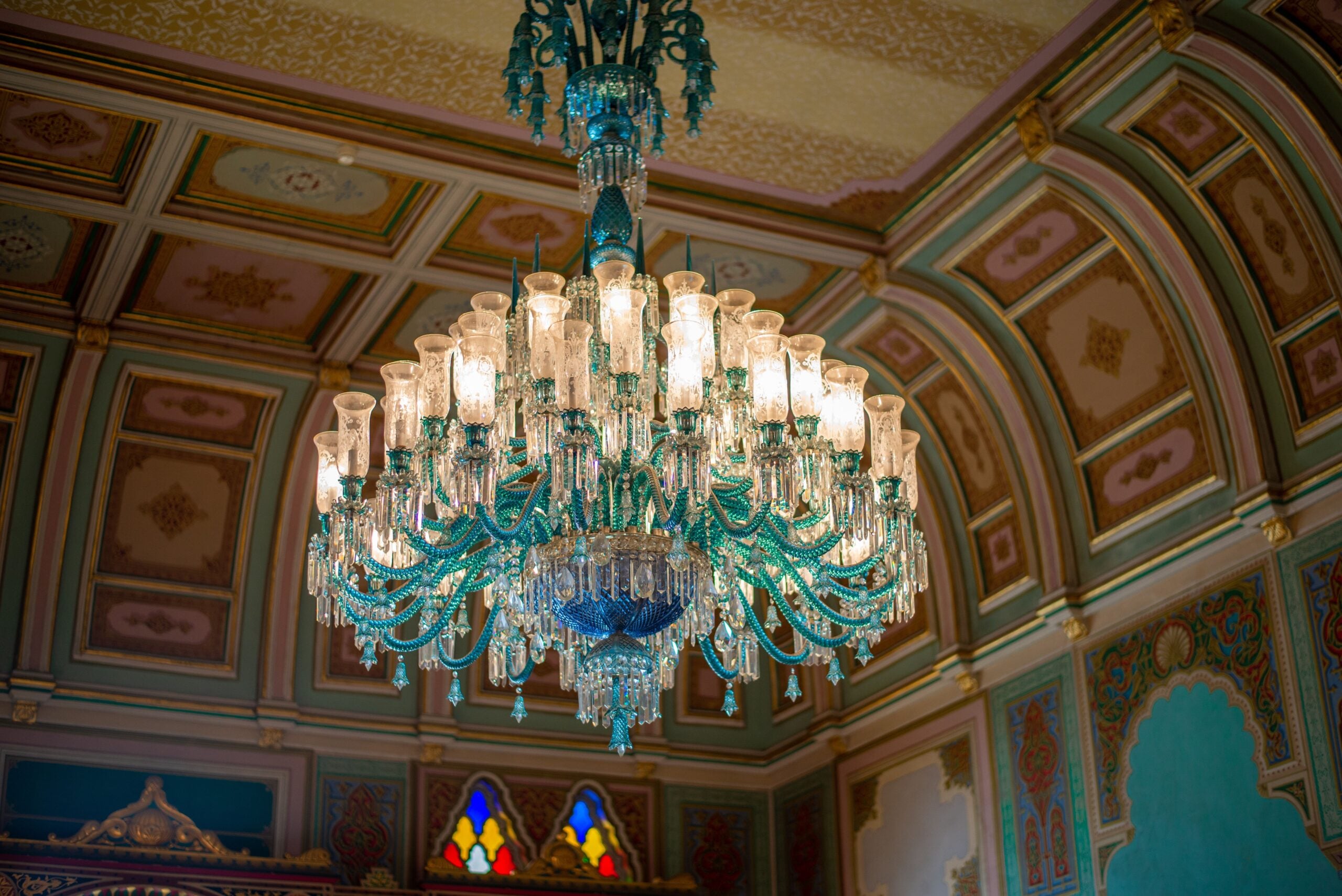
Begin with the intended scenes, then evaluate GUSURE Lighting’s custom LED chandelier designs against the project’s controls, appearance and maintenance requirements. A suitable decorative shape is the starting point; the electrical package must be specified separately.

Distinguish Replaceable Lamps from Integrated LEDs
A chandelier with replaceable LED lamps and one with integrated LED modules need different purchasing information. For a lamp-based design, identify the lamp base, physical lamp dimensions, approved lamp model and compatible dimmer. A lamp that fits mechanically may still have the wrong output, visible appearance or control behavior.
For integrated LEDs, request the module and driver specifications together. Record whether the arrangement uses constant current or constant voltage, how the modules are grouped and where the driver is installed. The project electrician and manufacturer should confirm compatibility; selecting a replacement driver by wattage alone is not adequate.
This distinction also changes future maintenance. A standardized replaceable lamp may simplify replacement, while integrated modules can support cleaner decorative forms. Neither approach is automatically better. Choose according to the required appearance, replacement access and agreed availability of service parts.
Name the Control Interface Precisely
“Dimmable” is not a complete specification. The control contractor should identify the exact system and expected interface before the manufacturer selects drivers. The following comparison is a coordination checklist, not a claim that every GUSURE fixture supports every option.
| Interface | Information to confirm | Approval evidence |
| Phase-cut | Dimmer model, supported phase type and load limits | Tested lamp or driver combination |
| 0–10V | Driver behavior, control wiring and switching arrangement | Wiring diagram and scene test |
| DALI | Compatible gear, addressing and system responsibilities | Product documentation and commissioning plan |
DALI is a digital lighting-control protocol. The DALI Alliance explains that certified DALI-2 control gear use a standardized dimming curve designed around brightness perception. That does not make a chandelier automatically compatible with every building system: the control components and system integration still require review. See the DALI Alliance’s key features guidance.
For a lamp-based chandelier, check the exact lamp and dimmer pairing against the control manufacturer’s information. Lutron’s LED compatibility tool is an example of a model-specific resource; it is not evidence that an unlisted chandelier combination has been approved.
Define What the Lowest Scene Must Look Like
An order that says “excellent low-level dimming” leaves too much open to interpretation. Instead, describe the use case: a quiet lounge scene, a decorative night setting or a dining scene with separate table lighting.
Ask the supplier to state the proposed minimum stable output and how it is defined. A percentage displayed on a wall controller is not necessarily the measured percentage of full light output. Avoid treating those values as interchangeable in the acceptance record.
Record the following behaviors during the sample test:
- Switch-on directly into the lowest agreed scene.
- Smooth transitions up and down through the operating range.
- Stable operation when the scene is held.
- Consistent response across repeated modules or fixtures.
- Agreed behavior after a power interruption.
Do not demand an arbitrary numerical dimming limit without checking whether the selected system can meet it. A useful requirement is one that can be demonstrated using the actual components and repeated on site.
Test Flicker and Noise Under Realistic Conditions
A short video of a chandelier at full brightness cannot demonstrate its behavior at low output. Include the intended driver, controller and a representative LED load in the mock-up, and repeat the test after the system has operated long enough to reach its normal working condition.
The US Department of Energy notes that flicker assessment can require multiple metrics and a mock-up to judge final acceptability. Its flicker research overview supports testing the complete arrangement rather than relying on a broad marketing label.
For the project acceptance test, observe normal viewing positions and listen for objectionable noise in a quiet room. If camera performance matters for events or hospitality content, test the cameras and settings that will actually be used. Phone footage can reveal an issue, but a clean phone video alone does not establish universal flicker performance.
Approve Color Through the Finished Decorative Material
The LED source is not the only thing the viewer sees. Glass tint, stone thickness, metal reflections and diffusers all influence the finished effect. Approve color using the assembled decorative sample wherever possible.
A useful mock-up places the proposed chandelier element beside the room’s key finishes: wood, fabric, stone or painted surfaces. Review it under the intended evening scene as well as full output. If two fixtures will appear together, inspect them side by side rather than approving isolated photographs on different days.
Record the selected color-temperature specification and any color-rendering requirements in the order. Do not assume that ordinary dimming changes color temperature; if a warmer appearance at low output is required, specify and test that behavior explicitly. Likewise, tunable-white functionality should be treated as a separate requirement, not an automatic feature of an LED chandelier.
Plan Driver Access Before Closing the Ceiling
The cleanest canopy design is not necessarily the easiest to maintain. Ask where the drivers sit, how they are accessed and what must be removed for replacement. The service method should not depend on damaging the finished ceiling or dismantling most of the chandelier.
If remote drivers are proposed, the manufacturer must confirm the permitted wiring arrangement and cable-distance constraints for the selected equipment. Remote placement should not be assumed possible simply because a nearby service cupboard exists.
For several drivers, assign each one an identifier corresponding to its module or lighting zone. Keep this mapping in the handover documents. A facilities team should be able to identify the affected section without tracing an undocumented circuit through the decorative assembly.
An Illustrative Hotel Lounge Brief
Consider a lounge with one chandelier above the seating area, separate task lighting at the bar and architectural lighting along circulation routes. The chandelier’s main role is visual atmosphere, so the design team prioritizes a calm evening scene and consistent appearance across its illuminated elements.
The buyer requests a representative module, the proposed driver and the controller interface for a joint test. The controls contractor demonstrates scene recall and restart behavior. The designer approves the material appearance, while the facilities representative confirms access to the driver location.
This example contains no assumed price, energy saving or project result. Its value is the approval sequence: design, controls and maintenance are reviewed together before production, while changes remain manageable.
What to Include in the Enquiry
Send the room drawings, chandelier reference, supply voltage and frequency, control-system details, desired scenes and access constraints. State whether the project needs replaceable lamps or integrated modules, and identify who will approve the electrical package.
Ask GUSURE Lighting to confirm the available configuration for the selected design. Include the destination market and request the documentation required by the responsible project team; a component certificate should not be treated as approval of the complete fixture.
A clear brief turns “we need a dimmable chandelier” into a coordinated purchase with visible acceptance criteria.
Contact GUSURE Lighting with your drawings and project requirements to request a configuration review and quotation.
FAQ
Is every LED chandelier dimmable?
No. Dimming must be supported by the lamp or driver and by the connected control arrangement. Confirm the exact ordered configuration rather than assuming that an LED light source includes dimming.
Can I retain an existing dimmer?
Possibly, but the electrician must identify its model and check compatibility with the proposed load. Successful operation with the old chandelier does not establish compatibility with the replacement.
Does DALI guarantee a completely flicker-free chandelier?
No. The control protocol alone does not establish every aspect of optical performance. Review the driver and complete fixture, and test the intended operating scenes.
Should drivers be inside the chandelier or remotely installed?
Either may be suitable depending on the equipment and project layout. Confirm heat management, wiring limits and safe replacement access before approving the arrangement.
What should I send to request a dimmable custom chandelier?
Provide the design reference, dimensions, electrical supply, control model or protocol, required scenes, installation location and destination market. Ask for written confirmation of the proposed electrical configuration.