
Our custom lighting workflow
From a drawing to a buildable lighting fixture
Custom decorative lighting is not a single factory operation. These project records show the practical handoffs between the designer, metal workshop, finishing team, electrical assembly technicians and installation or shipping team. Materials and tests vary with each fixture; the core sequence remains traceable.
Project brief
Review reference images, room dimensions, installation points and lighting intent.
CAD engineering
Confirm production drawings, framework details, mounting and material specifications.
Samples & prototype
Evaluate selected finishes, diffusers, stone panels or a trial-hung frame.
Fabrication
Cut, form, weld and finish the custom metal components.
Assembly & inspection
Install optical and electrical components; check fit and visible lighting effects.
Protect & deliver
Use fixture-specific packing, ship securely and coordinate site installation as scoped.
Project 01 / Restaurant lighting
Custom Bamboo-Shadow Fabric Lantern Production
For a Shanghai restaurant, the brief called for an East Asian-inspired decorative lantern with soft bamboo silhouettes. The factory developed a curved frame, layered patterned material and an integrated LED lighting layout before installation.


CAD drawings and mounting layout
The team translated the design reference into technical views showing the round or oval metal framework, layout dimensions and planned material positions. Drawing approval established the fabrication reference.

Welded metal prototype
Metalworkers bent and welded the custom curved frame, creating a stable structural base for the lantern. A limited sample was assembled before moving into the complete fixture.

Sample trial-hanging inspection
The prototype was suspended with its initial shade components to assess proportions, framework fit and how the bamboo silhouette would appear under light.

Film cutting and application
Workers cut the specified flame-retardant film to size and adhered the film sections to the prepared frame. Alignment and surface flatness were reviewed before fabric wrapping.

Hand-applied double-layer fabric
Stretch fabric was applied over the film surface. Technicians carefully aligned the bamboo pattern and managed surface tension for a continuous finish and soft light diffusion.

LED system and wiring assembly
The lamp frame, LED strips and driver connections were assembled in their designated positions. Careful wire routing and fixture alignment helped prepare the lighting test.

Full illumination and visual inspection
The completed fixture was powered on to inspect brightness distribution, dark areas, visible frame details and the atmosphere created by the patterned fabric.

Protective framing and dispatch
Custom timber support and tie-downs were used to secure the large lantern for transport. The project documentation also records delivery and final site installation.

On-site suspension and positioning
The installation team positioned the lantern according to the approved ceiling arrangement, allowing the completed bamboo motif to form a focal point in the restaurant.
Project 02 / Architectural statement fixture
Industrial Fan-Inspired Chandelier Manufacturing
A client-provided interior visual guided this decorative fan-shaped chandelier. Unlike an operating ceiling fan, the fixture is conceived as sculptural lighting, with a rust-effect metal finish, ribbed acrylic diffuser panels and an integrated LED system.


CAD & 3D design refinement
Technical drawings and a three-dimensional view were developed to translate the proposed fan geometry into fabricable dimensions, component junctions and installation details.

Ribbed acrylic light-diffuser sample
The team provided a ribbed acrylic panel sample to assess texture and how light would pass through the shade before confirming the final diffuser material.

Rust-effect finish confirmation
Finish samples were reviewed to establish the intended aged metal appearance. The selected sample became a practical comparison reference for production finishing.

Metal cutting, forming and welding
Workshop technicians produced the fixture frame from individual metal elements, including cutting, forming and welding operations based on the confirmed structural drawings.

Frame fit and structural inspection
The unfinished components were assembled to verify frame symmetry, connection accuracy and fit before surface finishing and full electrical installation.

Finish and lighting test
After surface treatment, the workshop reviewed the ribbed acrylic panels and LED light distribution in a temporary assembly, checking the visible effect of the diffuser.

Final frame and light integration
The metal arms, diffuser modules and electrical components were brought together into a complete fixture and checked against the approved visual reference.

Trial hanging and protective packing
The complete lamp was trial-hung in a workshop setting to assess visual proportion and illumination, then prepared for shipment using tailored protection for its finished components.
Project 03 / Stone & metal craftsmanship
Custom Alabaster Chandelier Manufacturing Process
This multi-tier chandelier combines translucent stone panels with a metal support structure. The project record follows client approval of drawings, stone sample evaluation, welded fabrication, trial hanging, lighting checks and export-ready packing.


Engineering and ceiling planning
The design team provided detailed chandelier drawings and ceiling anchoring information, with attention to frame geometry, stone-piece dimensions and connection points.

Stone texture and translucency sampling
Individual alabaster samples were viewed against light to assess natural-looking pattern variation, diffusion and the effect of the chosen surface material.

Metal structure fabrication
The metal framework and connectors were cut and welded to the approved dimensions, providing the support for the layered stone panels.

Trial fit and suspension check
The multi-tier frame was suspended and inspected for alignment, overall hanging shape and accessible connection points before the final decorative elements were fully installed.
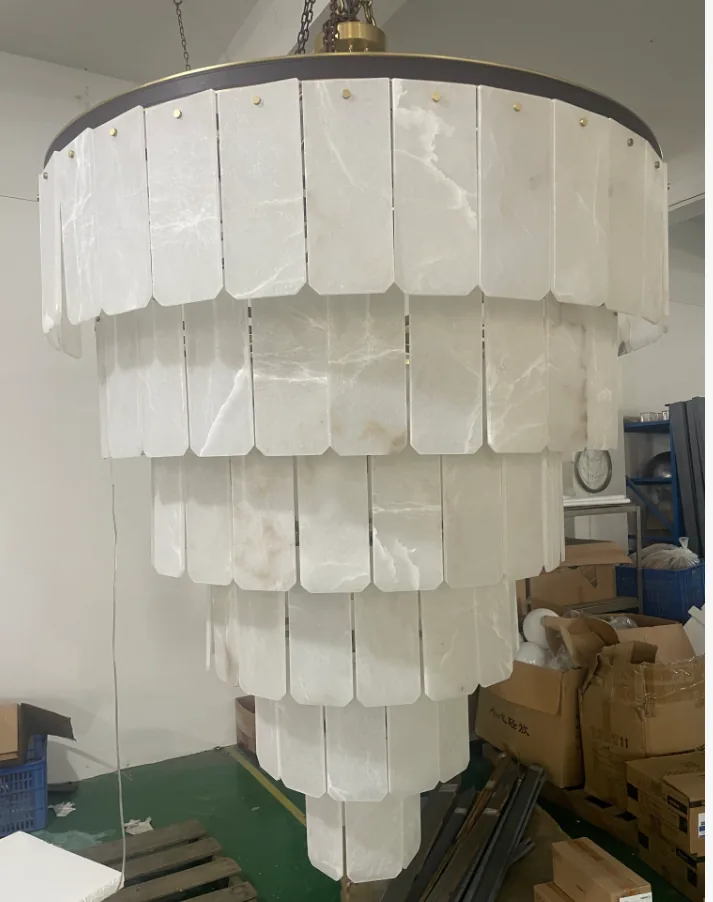
Panel installation and alignment
Approved stone panels were fitted to the support frame, with checks on matching, fixing positions and the visual rhythm created by the stepped arrangement.
Powered light and diffusion inspection
The assembled chandelier was powered on to review how the stone diffused the LED light and to spot areas requiring adjustment before packing.

Formed-foam protection and export crate
The documented shipping method used shaped foam within a reinforced export box to protect stone pieces, hardware and other fragile components.
Quality checkpoints
What we inspect before the lights leave the workshop
Review framework geometry, cutouts, joints, mounting points and component placement against the approved CAD views.
Compare fabric motifs, acrylic texture, rust-effect finish and alabaster translucency with agreed samples.
Check alignment and visual balance using a workshop trial setup; evaluate the real-site ceiling support separately.
Power the fixture to inspect visible illumination, diffusion, unexpected dark areas and stable connections.
Use production photographs and documented adjustments to confirm the visible result before packing.
Select formed foam, cartons or strengthened wooden supports according to fixture size, geometry and fragility.
Buyer questions
Custom Decorative Lighting FAQ
Practical questions from designers, contractors and project buyers planning a made-to-order light.
Can you manufacture a custom chandelier from a reference image?
Yes. Send a photograph, sketch, rendering or CAD file together with your intended dimensions and project location. We review the concept, refine the structure and prepare production drawings for approval before fabrication.
What materials are used in these three projects?
The restaurant lantern uses a welded metal frame, a specified film layer and hand-applied stretch fabric. The industrial-style pendant combines fabricated metal, ribbed acrylic and LED lighting. The stone chandelier uses metal supporting components with selected alabaster panels.
Do you provide material and finish samples before production?
The documented fan-shaped light included ribbed acrylic samples and a rust-effect finish sample. The alabaster project also used stone samples to review surface pattern and light transmission. Sampling depends on the approved project scope.
How do you check large custom fixtures before dispatch?
The workshop records show trial assembly or suspension, checks of visual proportions and structural fit, and powered lighting reviews. For specific projects, installation anchoring and electrical requirements should be confirmed against the approved drawings and local regulations.
Can you support custom lighting for restaurants and hotels?
Yes. GUSURE works on bespoke decorative lighting for hospitality and architectural interiors. Share ceiling heights, mounting details, intended atmosphere, quantity and delivery location so the fixture can be engineered for the actual space.
How are oversized or fragile chandeliers protected for shipping?
Packaging is chosen for the fixture. The supplied projects show reinforced wooden supports for oversized fabric lanterns, foam or cartons for fabricated metal fittings, and formed foam with reinforced export crates for the stone chandelier.
Have a project drawing?
Turn your lighting concept into a production plan
Send reference images, ceiling dimensions, materials, finish and project destination. GUSURE can review custom lighting options, drawing requirements and a suitable fabrication route.