
A custom brass chandelier can look simple in a rendering and become surprisingly complex once the project moves into fabrication. The visual result depends on more than choosing a “gold” finish. Base material, wall thickness, joining method, polishing direction, surface texture, finish sample, electrical layout, suspension, packaging and future maintenance all influence whether the completed fixture looks intentional or inconsistent.
For hotel lobbies, restaurants, villas and other high-end interiors, brass is especially useful because it can move between modern and traditional design languages. A clean brushed finish can support minimalist architecture, while hammered, antique or warm polished effects can make a fixture feel handcrafted and decorative. The material is also easy to combine with glass, crystal, alabaster and fabric.
GUSURE Lighting currently offers brass-based project products such as the Hand Hammered Brass Linear Chandelier and other customizable chandeliers. For project buyers, the important question is not simply whether a fixture contains brass. It is whether the manufacturer can control the visible result across the entire order.
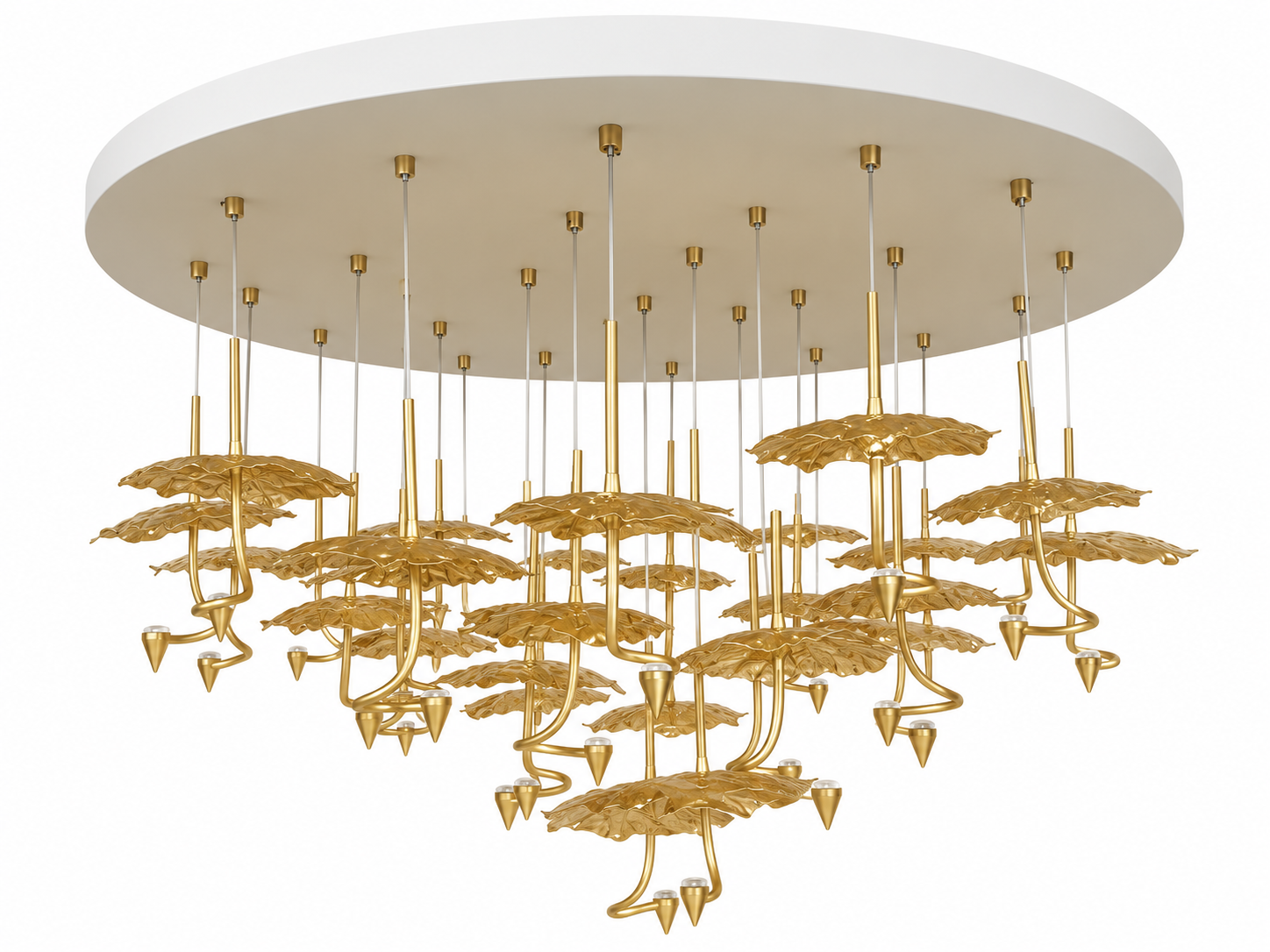
Start With the Design Function, Not the Finish Name
“Brushed brass” is not a complete specification. Two suppliers can use the same words and deliver visibly different colors, gloss levels and brushing patterns. Before selecting a finish, define what the chandelier must do in the space.
A hotel restaurant may need a warm metal that coordinates with door hardware and furniture details. A lobby statement piece may require stronger contrast against pale stone. A residential dining room may need a softer satin surface that does not create distracting reflections. A sculptural fixture may rely on hammering or irregular texture as part of the visual concept.
This is why a project specification should connect finish selection to architecture, surrounding materials and lighting conditions.
Brass, Copper and Brass-Finished Metal Are Not the Same Thing
In decorative lighting, the phrase “brass chandelier” can describe different constructions. The visible surface may be solid brass, a brass component over an internal structure, or another metal with a brass-tone surface treatment. Each option can be valid when it is properly specified.
For buyers, the practical questions are:
- Which components are actually brass?
- Which components are structural steel or another metal?
- How is the finish applied?
- Which parts will be visible after installation?
- Which areas are handled during assembly and therefore more exposed to fingerprints or abrasion?
- How will replacement components be matched later?
The answer should be written into the approved material schedule rather than assumed from a product photograph.
Build a Physical Finish Approval System
A finish sample is one of the highest-value control tools in a decorative lighting project. Screen images are useful for design discussion, but photography, display calibration and surrounding light can all change perceived color.
A stronger process is:
- Agree on the base metal and target appearance.
- Produce one or more finish swatches on representative material.
- Review the swatch under project-relevant lighting.
- Mark the approved sample with project name, date and revision.
- Keep a matching control sample at the factory during production.
- Compare production components against that sample before final assembly.
For large orders, the approved sample should be treated as a manufacturing reference, not as a decorative suggestion.
Compare Common Brass Finish Directions
| Finish Direction | Visual Character | Typical Project Use | What to Approve |
| Brushed brass | Refined, directional, lower glare | Contemporary hotels, dining rooms, modern villas | Brush direction, tone, gloss |
| Satin brass | Smooth, soft reflection | Guest-facing luxury spaces | Uniformity and color |
| Antique brass | Aged, warmer, more varied | Boutique hotels, heritage-inspired interiors | Degree of aging and contrast |
| Polished brass | Bright, reflective, formal | Statement pieces and classic interiors | Mirror quality, fingerprints, scratch visibility |
| Hammered brass | Handmade, textured | Restaurants, bars, artisanal interiors | Hammer scale, pattern consistency |
The Hand Hammered Brass Linear Chandelier is a useful example of how texture becomes part of the product identity rather than an afterthought.
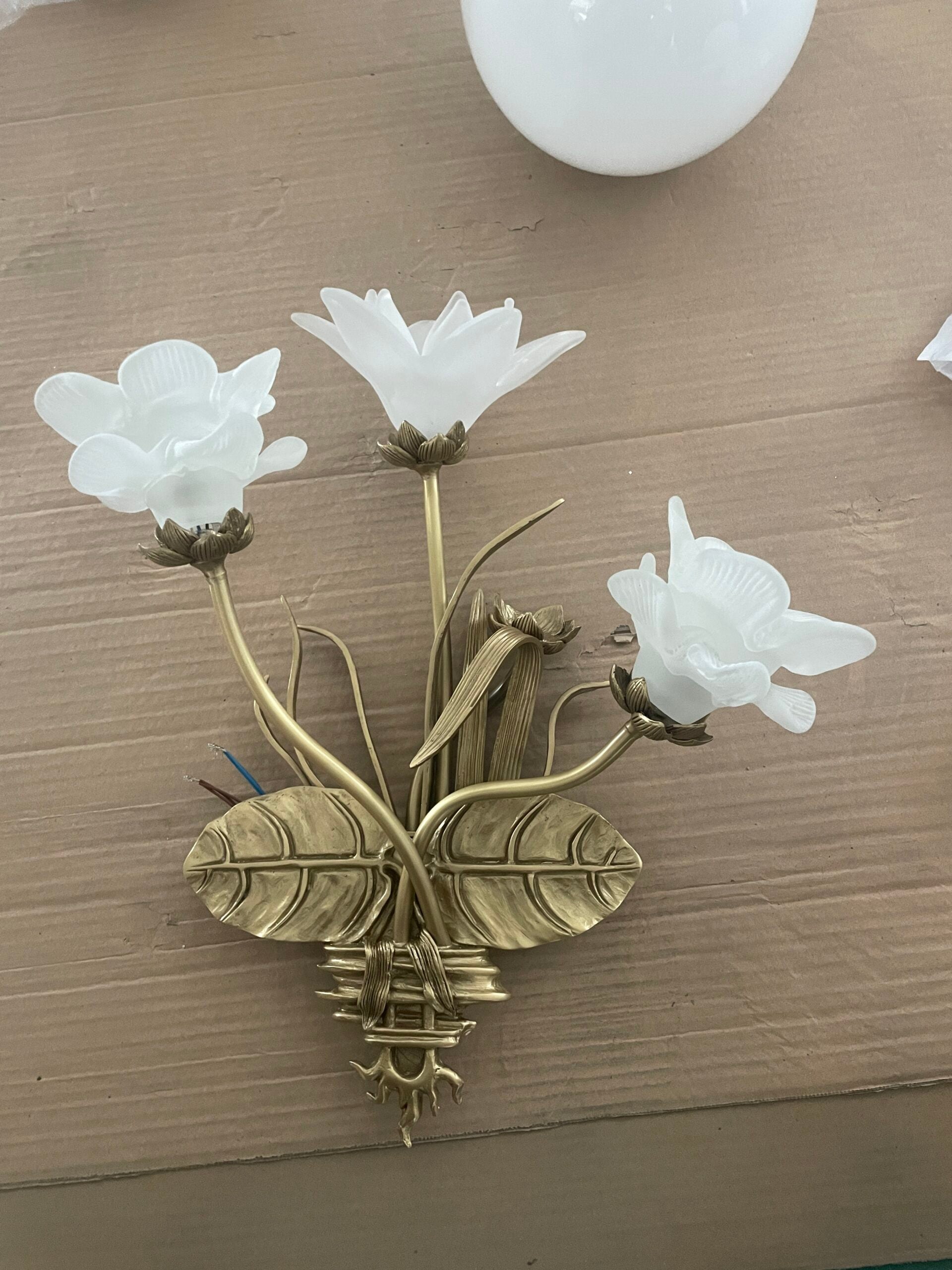
Check Fabrication Before Surface Finishing
A premium finish cannot hide poor fabrication. Welding, grinding, bending and joint alignment should be reviewed before the final surface treatment is completed.
On a large brass chandelier, check whether:
- welded joints are positioned away from key sightlines;
- curved sections maintain consistent radii;
- repeated arms or modules match each other;
- visible seams are minimized;
- screw heads and connectors are intentionally placed;
- canopy and suspension details use the same finish language;
- the fixture can be disassembled without damaging finished surfaces.
This step matters because correcting geometry after plating, polishing or other finishing work often creates visible repair marks.
Coordinate Brass With Glass, Crystal or Stone
Brass rarely works alone in custom decorative lighting. A project may pair warm metal with hand-blown glass, natural alabaster, crystal drops or fabric shades.
The materials should be reviewed together. A brass tone that looks balanced against clear glass can feel too yellow beside warm stone. A dark antique finish can make amber glass richer but may reduce the visual lightness of a large chandelier. Highly polished metal may create unwanted reflections when paired with crystal.
When possible, approve a small material board containing the metal finish and the actual glass, crystal or stone sample. This creates a more reliable reference for both the design team and factory.
Consider Light Quality and Reflections
A decorative chandelier is seen both switched off and illuminated. The finish can change significantly when the light source is operating.
During sample review, check:
- whether LED reflections create visible bright spots on polished metal;
- whether warm light makes the brass too yellow;
- whether glass or crystal throws reflected patterns onto the metal;
- whether the fixture produces comfortable brightness from normal viewing angles;
- whether dimming changes the perceived finish and atmosphere.
This is especially important in hospitality projects where lighting scenes change between daytime, evening service, events and cleaning.
Plan Maintenance Before Finalizing the Structure
A custom brass chandelier should not require damage to its finish during routine maintenance. Access panels, removable glass elements, driver locations and replaceable lighting components should be considered before the product is frozen.
For large fixtures, ask which parts maintenance staff will touch. Those surfaces may need greater resistance to repeated handling. Spare screws, decorative caps, glass pieces and other small components can also reduce long-term operational risk.
GUSURE’s broader custom chandelier collection includes products using different metal, glass and crystal constructions, which makes cross-material coordination possible when a project requires a family of fixtures rather than a single centerpiece.
Custom Brass Chandelier Approval Checklist
Before production, confirm:
- ☐ Overall dimensions and drop height
- ☐ Base material for every major component
- ☐ Finish name plus physical approved sample
- ☐ Brush direction or texture pattern
- ☐ Welding and joint locations
- ☐ Canopy material and finish
- ☐ Suspension hardware appearance
- ☐ Glass, crystal or stone sample
- ☐ Light source and color temperature
- ☐ Dimming requirement if applicable
- ☐ Access for electrical maintenance
- ☐ Packing protection for finished metal surfaces
- ☐ Spare decorative components
- ☐ Final drawing revision
Why Project Buyers Work With a Custom Manufacturer
A catalog chandelier requires the room to adapt to the product. A project-made chandelier allows dimensions, suspension, finish and visual composition to be developed around the room.
GUSURE Lighting is based in Zhongshan and supports project-based custom lighting, OEM/ODM work, CAD development and low-quantity customization. The manufacturer’s public process includes design confirmation, sampling, production, shipment and after-sales support. For a brass chandelier, that workflow is useful because finish and material approvals can be locked before the entire order is produced.

FAQ
Is solid brass always required for a luxury chandelier?
No. The correct construction depends on fixture size, structure, weight, appearance and budget. What matters is that the material and finish are clearly specified and appropriate for the design.
How should a brushed brass finish be approved?
Use a physical metal swatch that shows the final color, gloss level and brush direction. Keep an approved control sample for production comparison.
Can a brass chandelier be customized for a hotel project?
Yes. Size, structure, metal finish, suspension, light source and decorative materials can be adjusted according to project requirements and manufacturing feasibility.
What information should I send for a custom brass chandelier quotation?
Send drawings or reference images, dimensions, quantity, finish reference, materials, voltage, color temperature, dimming requirement, ceiling condition, destination and required schedule.
How can finish inconsistency be reduced on a large order?
Approve one control sample, document the finish method, compare production batches under consistent lighting and inspect visible components before final assembly.
Start Your Custom Brass Lighting Project
If you are specifying a brass chandelier for a hotel, restaurant, villa or commercial interior, send your drawings, dimensions, quantity, finish reference and electrical requirements to GUSURE Lighting. The project team can review feasibility, prepare drawings and confirm the best production approach before manufacturing.
Contact GUSURE Lighting to discuss your project.