
Custom Chandelier Sample Approval: A Practical Pre-Production Checklist
A custom chandelier sample is not only a visual preview. It is the point where design intent becomes a manufacturable reference. If the sample is approved casually, the same unresolved detail can be repeated across the entire production order.
The strongest project teams use sample approval to lock dimensions, finishes, materials, light quality, connections, maintenance access, labeling and packing before mass production.
GUSURE Lighting’s public workflow includes CAD confirmation, sampling and production. The company also lists custom products such as Custom Luxury Chandeliers that can be adjusted around project dimensions and materials.
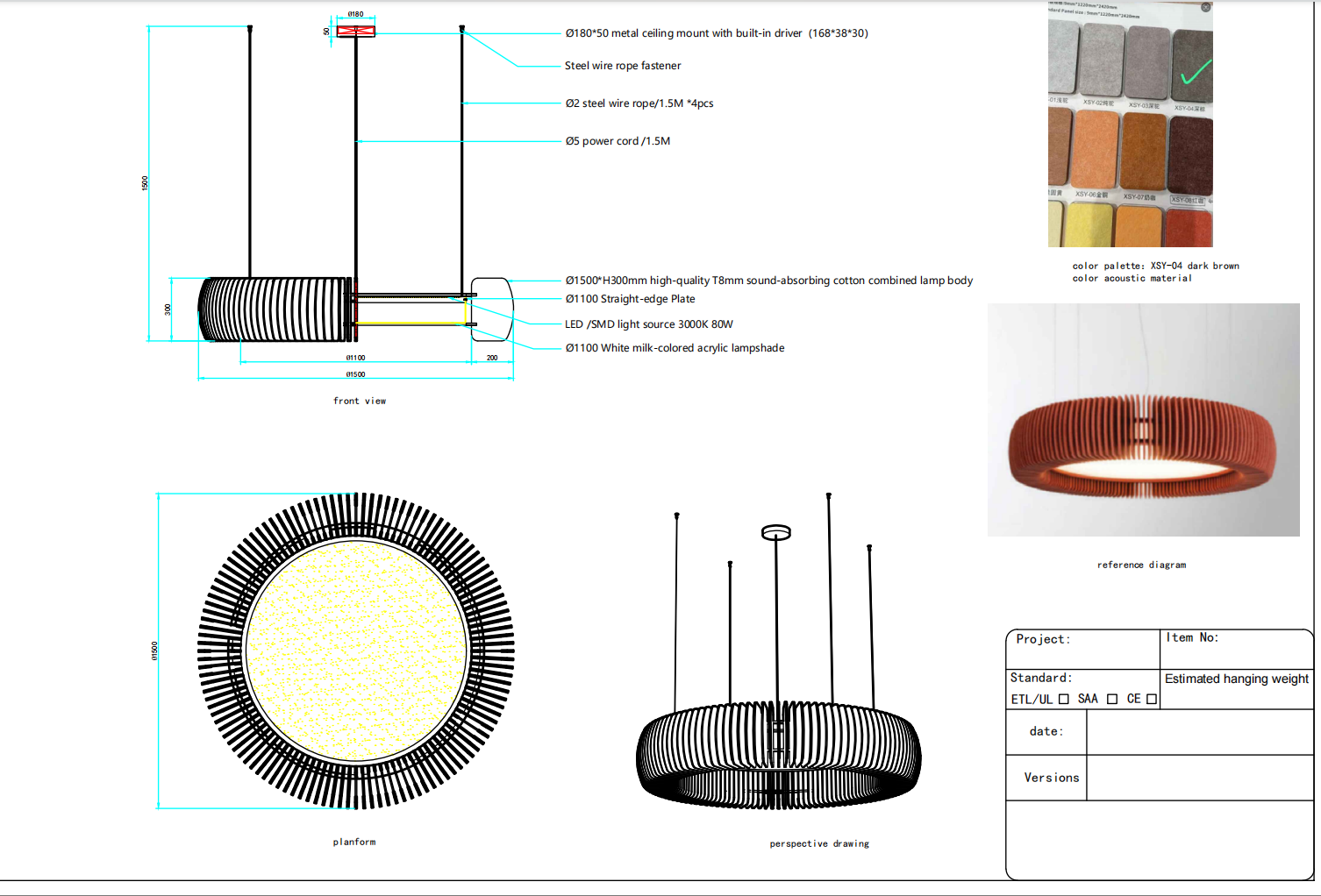
Decide What Type of Sample You Actually Need
Not every project requires one fully assembled chandelier before production. Choose the sample type based on risk.
Finish Sample
Useful when the main uncertainty is metal color or texture.
Material Sample
Useful for glass, crystal, stone, fabric or other decorative elements.
Partial Mock-Up
Useful for a repeated connection, a section of a large chandelier or a lighting detail that does not require the full fixture.
Full Prototype
Useful for new designs, repeated hotel-room products, complex electrical integration or fixtures where proportion must be reviewed at real scale.
The sample strategy should spend effort on the details most likely to create expensive changes later.
Check Dimensions Against the Approved Drawing
Measure the sample rather than assuming it matches the drawing.
Confirm:
- overall width or diameter;
- body height;
- total drop;
- canopy dimensions;
- spacing between repeated elements;
- wall projection for sconces;
- mounting-hole positions;
- component sizes.
Record deviations. If the design team accepts a change, revise the drawing so the sample and documentation remain aligned.
Approve Finish Under Realistic Light
A finish may look different under factory lighting, daylight and warm hotel lighting.
Review the sample beside relevant project materials if available. Check:
- tone;
- gloss;
- brush direction;
- texture;
- uniformity;
- fingerprints and cleaning response;
- visible welding or grinding marks beneath the finish.
If the finish is accepted, keep one control swatch or component for mass-production comparison.
Inspect Decorative Materials Individually
For glass, crystal, alabaster or other visible decorative parts, evaluate both appearance and attachment.
Check:
- size and shape;
- color;
- clarity or texture;
- edge quality;
- attachment hardware;
- ease of removal;
- acceptable natural or handmade variation.
If the material is illuminated, test it with the final light source.
Test the Fixture Switched On
A chandelier should not be approved only while unlit.
Evaluate:
- brightness;
- color temperature;
- glare;
- visible LED points;
- reflections in glass or metal;
- dimming behavior if specified;
- distribution of light across repeated elements;
- noise from drivers or loose components if relevant.
Where the fixture is part of a larger lighting scheme, judge it as a decorative layer rather than expecting it to replace architectural lighting.
Review Structure and Assembly
The sample is the best time to discover whether a product is difficult to assemble.
Ask the factory team to demonstrate:
- how the fixture is suspended;
- how modules connect;
- how glass or crystal is installed;
- where electrical connections are made;
- which tools are required;
- how a damaged decorative part would be replaced;
- how the product will be packed after disassembly.
If the installation method is confusing in the factory, it will be even harder on an international jobsite.

Use a Formal Approval Table
| Item | Status | Notes / Action |
| Dimensions | Approve / Revise | |
| Finish | Approve / Revise | |
| Glass/stone/crystal | Approve / Revise | |
| Light effect | Approve / Revise | |
| Dimming | Approve / Revise | |
| Suspension | Approve / Revise | |
| Assembly | Approve / Revise | |
| Maintenance access | Approve / Revise | |
| Packaging | Approve / Revise | |
| Labels/accessories | Approve / Revise |
Do not rely on scattered chat messages. One consolidated approval record reduces ambiguity.
Photograph Every Approved Detail
A photo log helps connect physical samples with written approvals.
Photograph:
- full fixture;
- finish close-up;
- decorative materials;
- canopy;
- suspension connection;
- wiring access;
- packing method;
- labels;
- any area where the customer accepted a specific variation.
Add the project name and date to the approval record.
Review Packaging Before Mass Production
Packaging should be tested using the real sample, not designed after production is complete.
Check:
- whether fragile parts touch each other;
- whether finished metal rubs against foam or hardware;
- whether small accessories can become lost;
- whether cartons are easy to identify;
- whether unpacking sequence matches installation sequence;
- whether spare parts are clearly separated.
For complex fixtures, a packing photograph or diagram can be included in the installation documentation.
Freeze the Revision After Approval
Once the sample is approved, issue a final production revision. It should reflect all accepted changes.
A good freeze package includes:
- final drawing;
- BOM or material schedule where applicable;
- finish code;
- approved sample reference;
- electrical configuration;
- packaging requirement;
- accessory list;
- quantity;
- approval date.
This becomes the baseline for QC.
Pre-Production Approval Checklist
- ☐ Final drawing matches approved sample
- ☐ Dimensions measured
- ☐ Finish sample signed or coded
- ☐ Decorative material approved
- ☐ Fixture tested illuminated
- ☐ Dimming checked if required
- ☐ Suspension and assembly demonstrated
- ☐ Maintenance access reviewed
- ☐ Packing method reviewed
- ☐ Accessories and spare parts listed
- ☐ Photos stored
- ☐ Revision frozen for production

FAQ
Is a full chandelier prototype always necessary?
No. A finish sample, material sample or partial mock-up may be enough when the design risk is limited. Complex or repeated products benefit more from full prototypes.
Who should sign off the sample?
The responsible project buyer, designer or authorized project representative should approve it according to the project’s internal process.
What happens if the sample differs from the drawing?
Either the sample should be corrected or the drawing should be formally revised if the project accepts the change. Production should not proceed with conflicting references.
Should packaging be approved during sampling?
Yes, especially for fragile or complex chandeliers. Packaging affects damage risk and installation efficiency.
Does GUSURE provide sampling for custom projects?
GUSURE’s published project process includes product sampling after drawings are confirmed. Exact sample scope and timing depend on the project.
Start Your Custom Lighting Development
Send GUSURE Lighting your concept drawings, dimensions, material requirements and project schedule. Agree on the sample type and approval criteria before mass production so the prototype becomes a reliable manufacturing reference.
Contact GUSURE Lighting to start a custom chandelier sample or project review.