
A multi tier chandelier creates impact by repeating or stacking visual layers. In a hotel atrium, ballroom, grand staircase or double-height residence, tiers help the fixture occupy a large vertical volume without relying on one oversized solid form.
The design can appear simple in elevation—two rings, three stone layers, several glass bands—but each tier affects weight, balance, wiring, suspension and installation. Buyers should therefore review tiered chandeliers as engineered assemblies rather than purely decorative compositions.
GUSURE Lighting offers a Luxury Natural Alabaster Multi-Tiered Pendant that illustrates how repeated stone layers can create vertical rhythm. The same planning principles also apply to metal, glass and crystal tiered chandeliers.
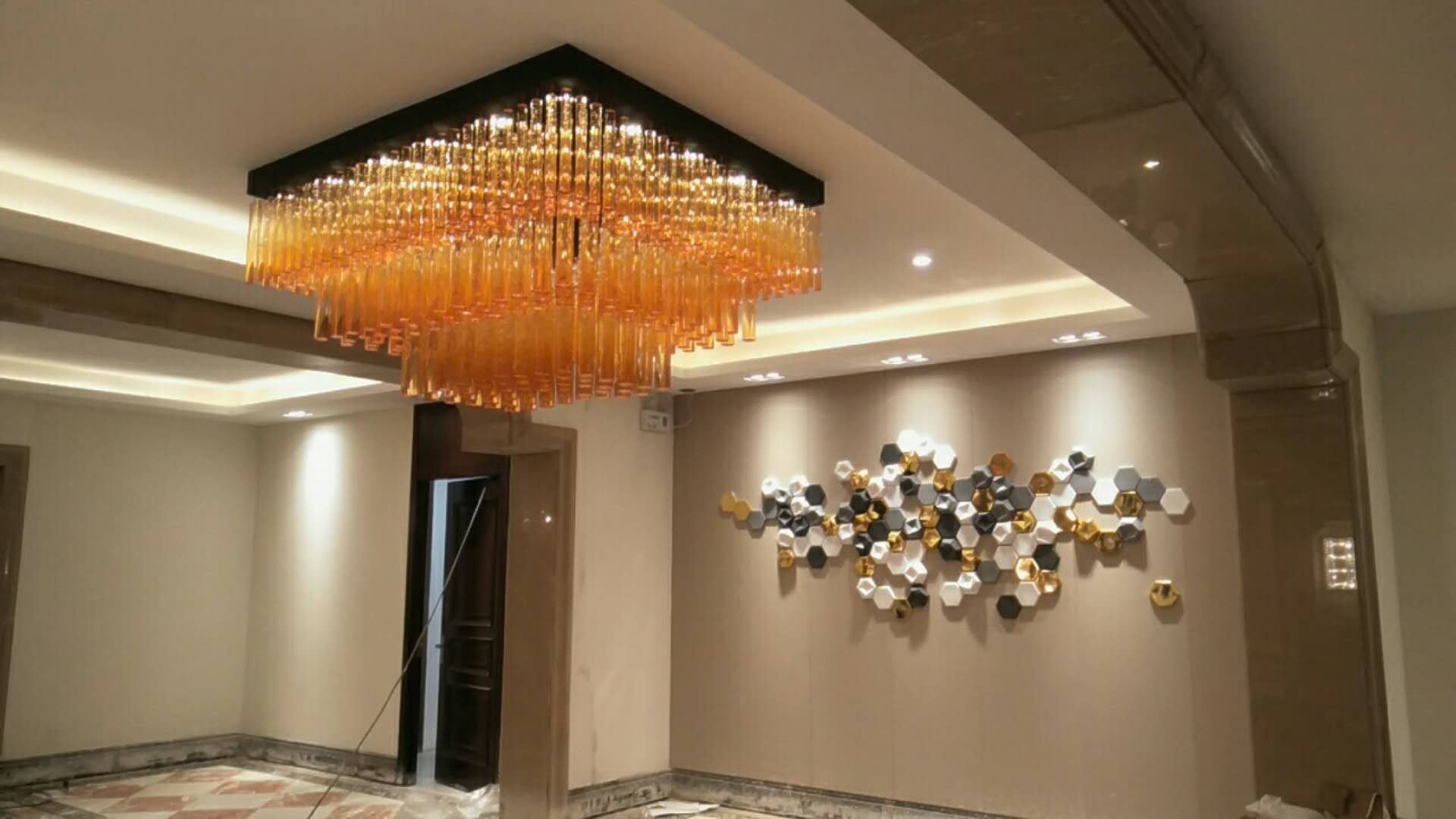
Decide What the Tiers Are Doing Visually
Tiers can create different effects:
- a gradual cascade from large to small;
- equal rings stacked vertically;
- offset layers creating movement;
- repeated glass or stone bands;
- dense lower tiers and lighter upper tiers;
- asymmetrical sculptural compositions.
The designer should define whether the chandelier should feel architectural, traditional, floating, heavy, delicate or dramatic. That decision influences spacing and support strategy.
Proportion Matters More Than Tier Count
A three-tier chandelier is not automatically more impressive than a two-tier chandelier. If the layers are too close, the fixture can look compressed. If they are too far apart, the composition may feel disconnected.
Review:
- overall height;
- diameter or width of each tier;
- vertical distance between tiers;
- size of repeated decorative elements;
- relationship to ceiling height;
- visual center of gravity.
For high-ceiling spaces, a scale drawing should include nearby architectural features such as balconies, wall panels and doors.
Treat Each Tier as Part of the Structural System
Every layer adds load and connection points. The manufacturer needs to determine whether tiers are:
- independently suspended;
- connected to a central frame;
- supported by rods;
- connected by cables;
- assembled as modules.
From the project side, the building support must be reviewed by qualified professionals using the manufacturer’s weight and suspension information.
For very large fixtures, independent suspension can sometimes make leveling easier, while a common central structure may simplify visual alignment. The correct approach depends on the design.
Leveling Is a Visible Quality Issue
A tiered chandelier magnifies small alignment errors. A ring that is a few millimeters out of level may become obvious when compared with the ring above it.
The installation plan should allow adjustment at each relevant suspension point. Before crystal, stone or fragile decorative parts are installed, the main structure should be leveled and checked from multiple directions.
A practical sequence is:
- install the ceiling support and canopy;
- suspend the primary structure;
- level major tiers;
- connect electrical wiring;
- install decorative elements;
- recheck level after final weight is added;
- test lighting scenes.
Coordinate Wiring Across Multiple Layers
Tiered fixtures may contain light sources on several levels. Wiring should be organized so it remains hidden, serviceable and appropriate for the project’s control strategy.
Confirm:
- whether all tiers operate together;
- whether different tiers require separate circuits;
- driver locations;
- dimming method;
- access for future service;
- connector strategy for modular shipping.
If the chandelier is intended for a ballroom, separate control zones may be useful, but they must be designed into the electrical architecture from the beginning.
Material Weight Changes the Engineering Approach
A multi-tier chandelier made with thin metal and acrylic behaves differently from one using natural alabaster, thick glass or dense crystal.
The Natural Alabaster Multi-Tiered Pendant uses natural stone panels, so project review must consider the actual material as well as the visual arrangement.
For any heavy decorative material, ask how the manufacturer controls:
- individual component attachment;
- load at each connection;
- transport protection;
- installation sequence;
- replacement access.
Design the Chandelier for Cleaning
Tiers can trap dust and make internal surfaces difficult to reach. Before approval, imagine how the fixture will be cleaned after one year of operation.
Check whether:
- horizontal surfaces collect visible dust;
- inner rings can be reached from below;
- decorative panels can be removed individually;
- maintenance equipment can access each layer;
- electrical components are protected during cleaning.
Ballrooms and hotel atriums often have limited maintenance windows, so access should be considered part of lifecycle cost.
Multi-Tier Chandelier Decision Table
| Design Decision | Why It Matters | Approval Method |
| Tier diameter/width | Controls scale and hierarchy | Elevation drawing |
| Tier spacing | Determines visual rhythm | 3D view or mock-up |
| Suspension method | Affects leveling and structure | Technical drawing |
| Material | Influences weight and appearance | Physical sample |
| Lighting zones | Affects scene flexibility | Electrical schedule |
| Modularity | Affects shipping and installation | Assembly drawing |
| Access | Affects cleaning and repair | Maintenance review |

When a Tiered Chandelier Is a Good Choice
Tiered designs are especially effective when the architecture has a clear vertical axis or formal center. Typical uses include:
- hotel lobbies;
- atriums;
- ballrooms;
- banquet halls;
- grand staircases;
- double-height villa living rooms;
- large dining spaces.
They can also help break a very large chandelier into visual layers that are easier to manufacture and ship as separate modules.

FAQ
Is a 3-tier chandelier always better for a high ceiling than a 2-tier chandelier?
No. The correct tier count depends on overall height, width, architectural scale and design intent. Proportion is more important than the number of layers.
Can each tier be dimmed separately?
It may be possible if the electrical design and control system are planned for separate circuits. This should be confirmed before production.
How is a multi-tier chandelier leveled?
The suspension system should provide adjustment at relevant points. The frame is typically leveled before and after decorative components are installed.
Can stone or glass tiered chandeliers be shipped internationally?
Yes, but heavy or fragile decorative materials require modular design and protective packaging appropriate to the final product.
Can GUSURE customize the number and size of tiers?
GUSURE supports custom project development. The final tier arrangement, dimensions and structure should be confirmed through drawings and sampling.
Start Your Multi-Tier Chandelier Project
Provide GUSURE Lighting with ceiling height, target chandelier dimensions, tier concept, material preference, electrical requirements and site access information. For large atrium or ballroom projects, include reflected ceiling plans and elevation drawings so the suspension and modular strategy can be reviewed early.
Contact GUSURE Lighting to discuss a custom tiered chandelier.