
Restaurant Chandeliers Shape Atmosphere and Brand Memory
Guests may not remember the model of a light fixture, but they remember how the dining room felt. A chandelier can make a restaurant intimate, theatrical, relaxed, formal or energetic. It can mark a host desk, create a rhythm above tables or become the visual signature in guest photographs.
Restaurant lighting must also work operationally. Staff need usable light, table settings should look appealing, glare must be controlled and fixtures must tolerate long operating hours and regular cleaning.
GUSURE Lighting offers chandeliers for restaurants and dining spaces that can be customized in scale, material, finish, light source and suspension for standalone restaurants, hotel dining rooms, bars, clubs and private dining areas.
Begin with the Restaurant Concept
The chandelier should support the restaurant’s positioning.
- A fine-dining room may use warm brass, textured glass or crystal with precise dimming.
- A resort restaurant may favor natural forms, woven textures or soft stone-like materials.
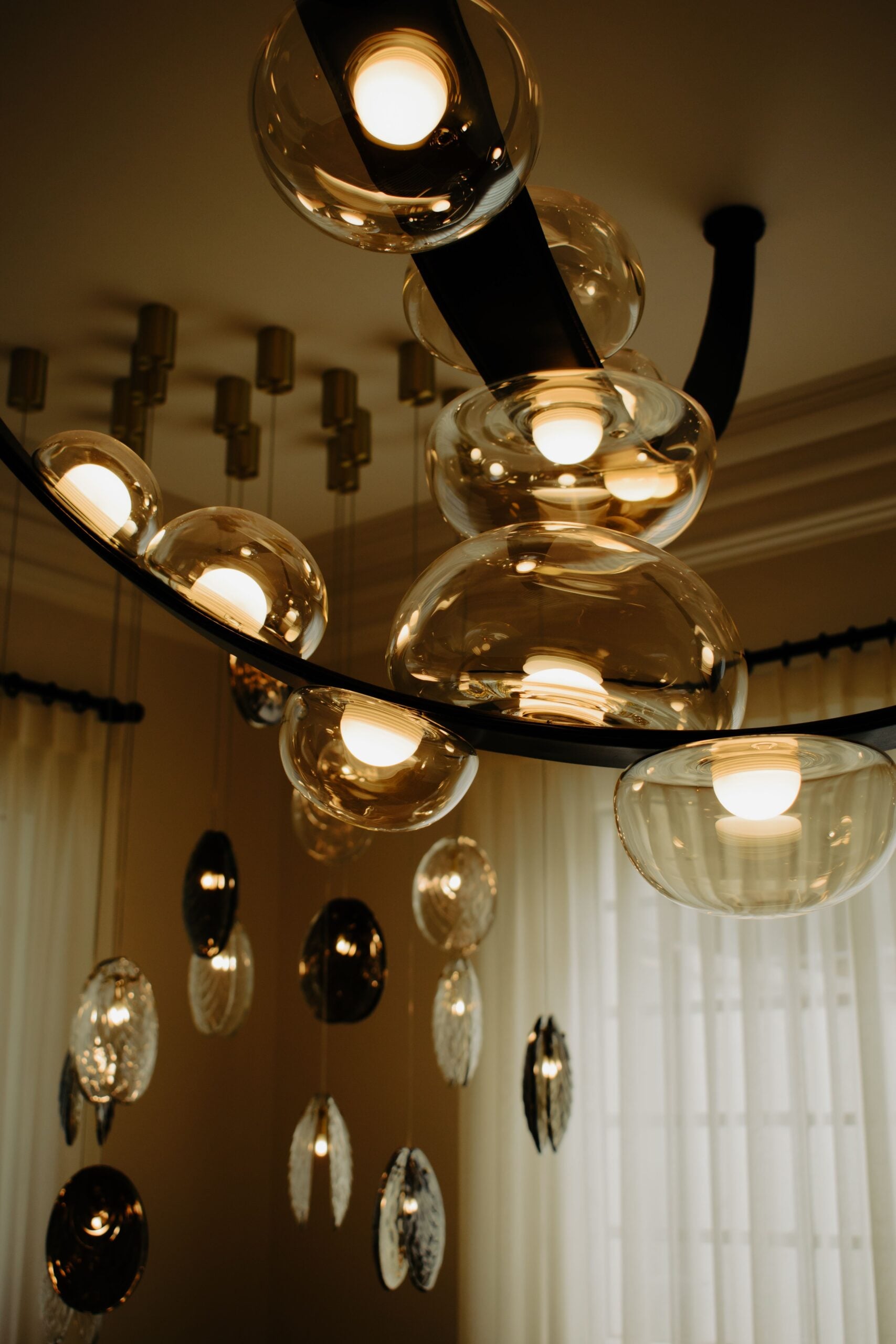
- A contemporary bar may use smoked glass, dark metal and lower, more dramatic light.
- A casual dining brand may need repeatable modular fixtures that can be reproduced across locations.
- A private dining room may use one sculptural chandelier as a strong focal point.
Create a short lighting design statement before selecting products. For example: “Warm, low-glare decorative lighting with amber glass and brushed brass, designed to feel intimate at dinner while remaining clear enough for lunch service.”
This statement is more useful than a list of visual references without priorities.
Decide What the Chandelier Is Doing
A restaurant chandelier can have several roles:
- Landmark at the entrance
- Decorative focal point in the main room
- Repeated rhythm above tables
- Visual divider between dining zones
- Feature above a bar counter
- Centerpiece in a private room
- Brand object visible from the street
The role determines scale and brightness. A chandelier used as a landmark can be visually dominant without lighting every table. Repeated fixtures above dining tables need more consistency and closer glare control.
Scale the Chandelier to Furniture and Seating
In dining spaces, fixture size often relates more strongly to tables or counters than to the full room.
For a chandelier above a table:
- Keep the visual width in proportion to the tabletop.
- Confirm that the fixture does not block views between guests.
- Check the lowest point from seated and standing eye levels.
- Allow for table movement if layouts change for events.
- Consider the combined effect of several fixtures, not only one.
For a long communal table, a linear chandelier or repeated pendants can create rhythm. A round table may suit a circular, branching or clustered fixture. Above a bar, a linear composition can follow the counter and emphasize its length.
Control Glare at Seated Eye Level
Restaurants are sensitive to glare because guests spend long periods looking across tables. An exposed source that appears harmless in a ceiling plan may be uncomfortable from a seated position.
Use:
- Frosted or textured glass
- Recessed or shielded LEDs
- Opaque shades with controlled openings
- Lower-output sources distributed across more points
- Dimming
- Careful fixture height
Review the chandelier from the actual seated eye level. Renderings often show the space from a standing viewpoint and can hide glare problems.
Choose Color Temperature for Food, Materials and Mood
Warm light is commonly used in hospitality because it supports a comfortable atmosphere and complements wood, brass, warm stone and many food presentations. The exact color temperature should be coordinated with the wider lighting scheme rather than selected independently.
Also define:
- Color-rendering expectations
- Consistency between the chandelier and nearby downlights
- Day and evening scenes
- Dimming range
- Light-source replacement or long-term matching
Mixing noticeably different whites in one view can make even premium fixtures feel uncoordinated.
Use Dimming to Support Different Service Periods
A restaurant may operate during breakfast, lunch, dinner and late-night service. One fixed light level rarely works for every period.
Possible scenes include:
- Cleaning and setup
- Daytime service
- Evening dining
- Late-night bar
- Private event
- Closing
Confirm the dimming method and minimum stable level with the project’s electrical and control teams. Decorative LEDs, drivers and the building control system must be compatible.
Select Materials for the Restaurant Environment
Glass
Glass is versatile and can be clear, colored, smoked, ribbed, frosted or textured. It suits both contemporary and classic interiors.
Brass and Copper
Warm metals create a premium hospitality character. Choose a finish that coordinates with furniture, door hardware and decorative trims.
Crystal
Crystal suits formal dining, ballrooms and luxury hotel restaurants. It creates sparkle but requires a realistic cleaning plan.
Fabric
Fabric shades soften light and support an intimate mood. Material selection should consider cleaning and project requirements.
Alabaster and Stone-Like Materials
Translucent stone produces calm diffused light and works well with quiet-luxury interiors. Support, weight and replacement matching should be planned.
Design for Cleaning and Daily Operation
Restaurant fixtures can be exposed to dust, cooking residue and frequent operation. Place highly intricate fixtures carefully, especially near open kitchens.
Consider:
- Wipeable surfaces
- Removable diffusers
- Accessible lamps or modules
- Driver replacement
- Spare glass
- Finish durability
- Cleaning access without moving fixed furniture
An impressive chandelier that takes a full day to clean may be unsuitable above a heavily used dining zone.
Repeated Chandeliers for Multi-Location Restaurant Brands
Restaurant groups may need a signature fixture across several locations. A custom design should then balance brand consistency with practical adaptation.
Create a controlled system:
- Core shape and finish remain consistent
- Two or three approved sizes cover different spaces
- Standard light source and driver
- Repeatable packaging
- Replaceable decorative components
- Location-specific suspension length
This approach is more efficient than redesigning each fixture from zero while still allowing the chandelier to fit different ceiling heights.
Coordinate Decorative and Functional Lighting
Chandeliers are one layer in the restaurant lighting scheme. Other layers may include:
- Downlights for tables
- Wall lights for perimeter ambience
- Concealed lighting for architectural surfaces
- Accent lights for art and displays
- Task lighting for service stations
- Emergency and circulation lighting
The chandelier should complement these layers. If downlights already provide table illumination, the chandelier can focus on atmosphere. If the chandelier is expected to light the table, its optical design and output need more detailed evaluation.
Information Needed for a Restaurant Chandelier Quote
Send:
- Restaurant concept and location
- Floor plan and reflected ceiling plan
- Ceiling height
- Table or bar dimensions
- Reference images or rendering
- Target chandelier size and quantity
- Material and finish preference
- Color temperature
- Dimming or control system
- Input voltage
- Cleaning and maintenance considerations
- Installation date
- Packaging and shipping destination
Common Specification Mistakes
Selecting the Chandelier Before Finalizing Tables
Furniture changes can leave the fixture off-center or wrongly scaled.
Using Decorative Light as the Only Lighting Layer
The dining room may look atmospheric but fail operational needs.
Ignoring Reflections
Glass walls, mirrors and polished stone multiply bright sources and can increase glare.
No Dimming Coordination
Specifying “dimmable” is not enough. The driver, protocol and controls must work together.
Choosing a Finish Without a Physical Sample
Brass and bronze tones vary significantly under different lighting.
Create a Restaurant Chandelier That Works During Service
The best hospitality chandeliers are memorable without becoming operational obstacles. They fit the furniture layout, control glare, support lighting scenes and remain maintainable after the opening photography is finished.
Share your restaurant plan, interior rendering and required atmosphere with GUSURE Lighting. Our team can help develop chandeliers for dining rooms, bars, hotel restaurants and branded hospitality spaces.
FAQ
What type of chandelier is best for a restaurant?
The best type depends on the brand concept and furniture layout. Linear fixtures suit long tables and bars, while round, branching or clustered chandeliers work well above feature tables and central zones.
How high should a restaurant chandelier hang?
The fixture should feel connected to the table or zone without blocking guest views or causing glare. Confirm the lowest point from seated and standing positions.
Should restaurant chandeliers be dimmable?
Usually yes. Dimming helps the space adapt from cleaning and daytime service to evening dining and late-night operation.
Which materials are easiest to maintain?
Simple glass and finished metal surfaces are generally easier to wipe than dense crystal or highly intricate decorative assemblies. The right choice depends on location and cleaning access.
Can one custom chandelier design be used in several restaurant locations?
Yes. Create a repeatable fixture family with approved sizes, consistent finishes, standard electrical components and adjustable suspension lengths.