
Material Determines More Than the Look of a Chandelier
Material affects color, transparency, weight, cost, fabrication, packaging and maintenance. It also changes how large a chandelier feels in the room. Clear glass can occupy a large volume without blocking views, while alabaster creates a stronger solid presence. Brass adds warmth and craftsmanship; crystal creates sparkle; acrylic enables lightweight repeated forms.
When reviewing GUSURE Lighting’s glass, crystal, brass and alabaster chandeliers, evaluate each design not only by style but by how its materials fit the project environment.
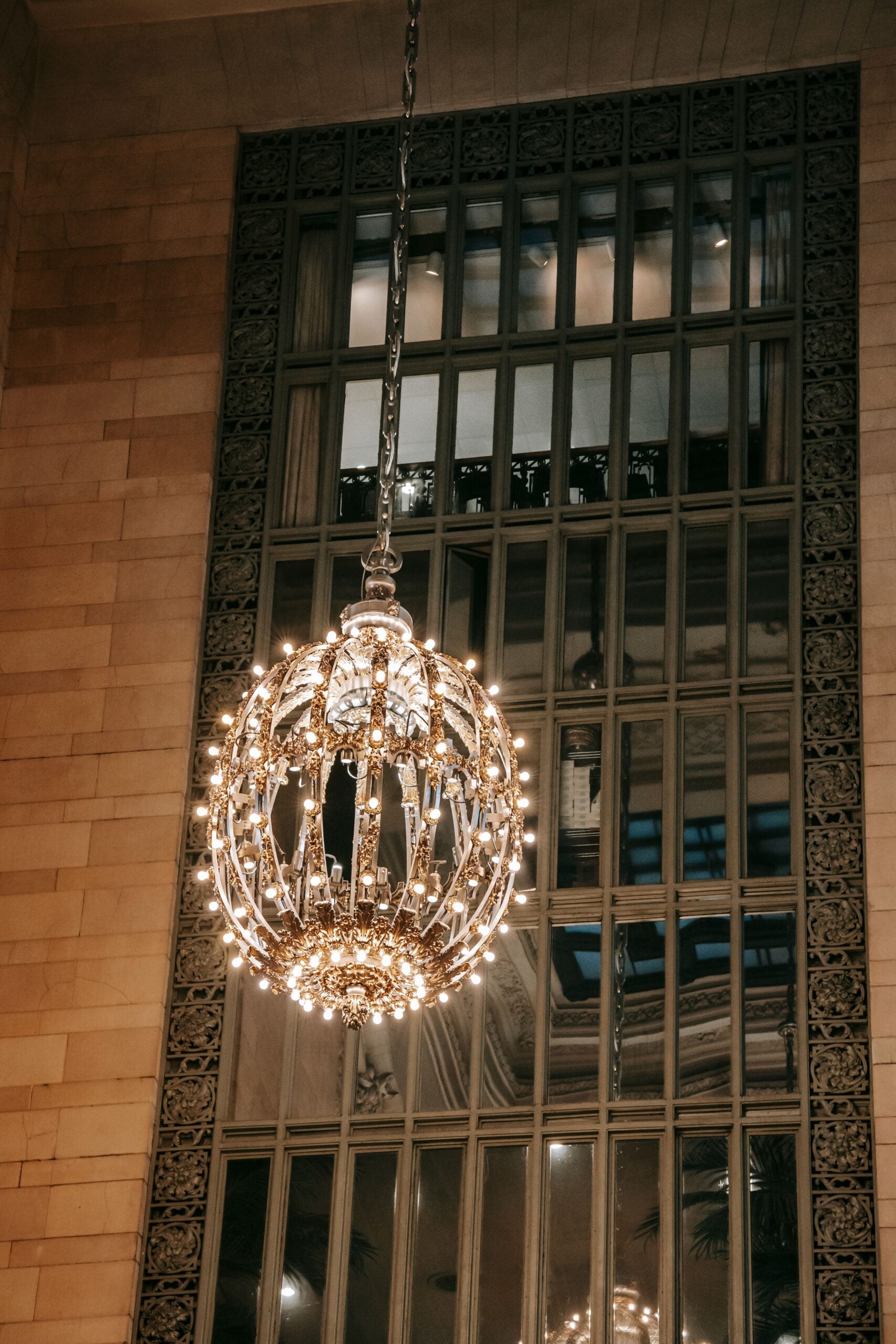
Glass: The Most Versatile Decorative Medium
Glass can appear almost invisible or become the strongest color in the room. It can be clear, frosted, smoked, amber, colored, ribbed, textured, bubble-filled or hand-shaped.
Advantages
- Wide range of shapes and optical effects
- Suitable for modern, classic and artistic interiors
- Can diffuse, reflect or transmit light
- Works well in repeated modular compositions
- Coordinates with brass, steel, copper and stone
Considerations
- Fragile components require careful packing
- Hand-made pieces may vary slightly
- Fingerprints and dust can be visible on clear surfaces
- Replacement pieces should be documented and matched
- Heavy or thick glass needs secure support
Best Applications
Hotel lobbies, restaurants, villas, staircases, retail features and sculptural pendant clusters.
Crystal: Sparkle, Formality and High Visual Density
Crystal chandeliers use cut elements to refract and reflect light. The result can be traditional and grand or contemporary and geometric.
Advantages
- Strong sparkle and luxury association
- Effective in ballrooms, lobbies and formal spaces
- Available in many cuts and arrangements
- Creates rich visual detail
Considerations
- Dense layouts can be heavy
- Many small pieces increase installation time
- Regular cleaning is needed to preserve brilliance
- Crystal grade, cut and attachment quality affect appearance
- Spare elements should be included
Best Applications
Luxury hotel lobbies, ballrooms, banquet halls, formal villas and statement dining rooms.
Brass and Copper: Warmth, Structure and Craft
Brass and copper can form both the visible frame and decorative details. They suit branching forms, hammered surfaces, rings, leaves and finely machined components.
Advantages
- Warm premium appearance
- Strong fit with hospitality and residential interiors
- Supports brushed, polished and aged effects
- Can provide visible structural character
- Pairs well with glass, crystal and stone
Considerations
- Clarify whether the specification is solid material, sheet, plated metal or a color finish
- Finish samples are important
- Hand-applied patinas may show controlled variation
- Fingerprints can be visible on polished surfaces
- Weight and material cost vary by construction
Best Applications
Boutique hotels, restaurants, luxury villas, private clubs and organic sculptural chandeliers.
Stainless Steel: Clean Lines and Modern Precision
Stainless steel is widely used for modern frames, rings, plates and polished details.
Advantages
- Clean contemporary appearance
- Suitable for thin profiles and precise geometry
- Available in brushed, polished and colored finishes
- Useful for structural and decorative parts
Considerations
- Weld and polish quality influence the final appearance
- Large polished surfaces can show distortion or fingerprints
- Finish matching should be controlled
- Edge detailing matters on close-view fixtures
Best Applications
Modern hotels, commercial interiors, retail spaces and contemporary residences.
Alabaster and Translucent Stone: Soft Light and Quiet Luxury
Natural alabaster is valued for its veining and warm translucency. Stone-like composite materials can offer different consistency, weight or fabrication options. Project documents should state clearly which material is proposed.
Advantages
- Soft, diffused glow
- Natural variation creates uniqueness
- Strong quiet-luxury character
- Pairs well with brass and bronze
- Effective in warm, calm interiors
Considerations
- Natural veining and color vary
- Panel or shade thickness influences transmission
- Weight and brittleness require secure support
- Replacement matching can be difficult
- Samples should be viewed illuminated and unilluminated
Best Applications
Luxury residences, hotel lounges, spas, resort restaurants and refined reception areas.
Acrylic: Lightweight Freedom for Large Forms
Acrylic is useful for large diffusers, sculptural modules and installations where reduced weight or repeatable shapes are valuable.
Advantages
- Lighter than many glass solutions
- Can be cut, bent, formed and diffused
- Suitable for large modular installations
- Consistent repeated components
- Good integration with LED lighting
Considerations
- Surface scratching must be controlled
- Heat and LED spacing need evaluation
- Edge finishing affects quality
- Protective film should remain during fabrication and shipping
- Cheap-looking results occur when thickness and detailing are under-specified
Best Applications
Large commercial installations, modern hotel lobbies, shopping centers and contemporary sculptural lighting.
Ceramic, Fabric and Other Decorative Materials
Custom chandeliers can also use ceramic leaves, fabric shades, resin, wood, rattan or mixed media. These materials create distinctive identities but require project-specific evaluation.
Consider:
- Fire and project performance requirements
- Cleaning
- Humidity
- Color consistency
- Breakage
- Attachment method
- Long-term replacement
Do not select an unusual material only for novelty. It should support the interior concept and remain practical in the intended environment.
Glass vs. Crystal: Which Is Better?
Neither is universally better.
Choose glass when the project needs:
- Larger sculptural forms
- Color or texture
- Organic hand-made effects
- Softer diffusion
- Contemporary decorative variety
Choose crystal when the project needs:
- Strong sparkle
- Formal luxury
- Repeated cut elements
- High visual richness
- Classic or glamorous associations
Some chandeliers combine both: shaped glass provides the main form while crystal details add controlled brilliance.
Solid Brass vs. Brass Finish
These terms should not be used interchangeably.
- Solid brass componentsuse brass as the material.
- Brass sheet or tubemay form part of the visible structure.
- Brass platingapplies a metallic layer to another substrate.
- Brass-color coatingreproduces the color through paint or powder coating.
Each option has a different cost, appearance, weight and production process. A professional quotation should state the proposed construction clearly.
How Material Changes Chandelier Scale
Material density changes perceived size.
- Clear glass appears lighter and can extend across a large volume.
- Dense crystal feels visually rich and heavy.
- Dark metal outlines create strong contrast.
- Pale stone or alabaster forms become luminous solid objects.
- Thin acrylic elements can create a broad floating composition.
When comparing materials, place them into the actual interior rendering. A material sample alone does not show the final visual weight.
Combine Materials with a Clear Hierarchy
Mixed-material chandeliers are most successful when each material has a role.
For example:
- Brass provides the frame and warm detail.
- Textured glass creates the main decorative volume.
- Frosted diffusers soften the LED sources.
- Stainless steel provides concealed strength.
Using too many decorative materials can weaken the concept. Limit the palette and repeat key details across the project.
Material Approval Checklist
Before production, confirm:
- Exact material description
- Visible and hidden substrates
- Finish method
- Color and texture sample
- Illuminated sample where relevant
- Natural variation limits
- Edge and connection details
- Cleaning method
- Spare-component quantity
- Packing method
Choose Material for the Entire Project Life
The right chandelier material looks appropriate on opening day and remains manageable during shipping, installation, cleaning and future maintenance. Appearance matters, but so do weight, breakage, finish consistency and replacement.
Share your interior palette, desired atmosphere and maintenance expectations with GUSURE Lighting. We can help translate the concept into a practical combination of glass, crystal, metal, alabaster-style material or acrylic.
FAQ
Is glass or crystal better for a modern chandelier?
Glass usually offers more freedom in shape, color and texture, while crystal creates stronger sparkle. Modern fixtures can use either or combine them.
Is a brass chandelier made entirely from solid brass?
Not always. It may use solid brass components, brass sheet, brass plating or a brass-color finish. Confirm the construction in the quotation.
Does natural alabaster look identical from piece to piece?
No. Natural stone has variation in veining, tone and translucency. Approve the acceptable range and keep spare material when matching matters.
Is acrylic suitable for luxury chandeliers?
Yes, when thickness, edge finishing, diffusion, connections and lighting integration are carefully designed. Poor detailing, not the material alone, makes acrylic look inexpensive.
Which chandelier material is easiest to ship?
There is no universal answer. Lightweight modular materials may reduce handling difficulty, while fragile glass, crystal and stone need compartmented protective packing.